 한국어
한국어  English
  简体中文
简体中文  日本語
日本語  香港中文
香港中文  Français
  Español
  Bahasa Indonesia
Sustainability has become a key focus in the real estate and infrastructure sectors as environmental and social challenges grow. The Global Real Estate Sustainability Benchmark (GRESB) plays a critical role in assessing and comparing the Environmental, Social, and Governance (ESG) performance of real estate and infrastructure assets. GRESB provides standardized data for investors, asset managers, and stakeholders to make informed decisions about sustainability.
The importance of sustainability in real estate is undeniable. The built environment accounts for nearly 40% of global energy-related carbon emissions, according to the World Green Building Council [2]. Additionally, a report by Morgan Stanley highlights that buildings with strong ESG performance can attract up to 10% higher investment compared to traditional properties. A study by IFC echoes this, showing that sustainable buildings often enjoy up to 23% higher occupancy rates and command a 8% rent premium [3]. These findings underscore the growing investor preference for sustainable real estate as it not only contributes to a healthier planet but also delivers long-term financial returns.
GRESB’s standardized ESG evaluation framework helps fill a critical gap in real estate sustainability reporting, offering transparency and accountability. It assesses key factors such as energy efficiency, water management, social responsibility, and governance structures. This article will explore what GRESB is, its history and evolution, the methodology it uses to assess ESG performance, and its benefits for the real estate and infrastructure sectors with a view to equip readers with a better understanding of the framework.
What is GRESB?
The Global Real Estate Sustainability Benchmark (GRESB) [1] is a mission-driven, investor-led organization that serves as the global standard for measuring ESG performance in real estate and infrastructure sectors. As sustainability becomes an urgent global priority, GRESB provides critical tools for assessing and improving the environmental, social, and governance aspects of investment portfolios. Founded to meet the growing demand for ESG transparency, GRESB enables investors and managers to evaluate the sustainability performance of their assets using standardized and validated data.
GRESB’s core mission is to offer actionable insights and benchmarks that help financial markets make informed decisions. By collecting, validating, scoring, and independently benchmarking ESG data, GRESB ensures that investors and asset managers have access to consistent, reliable, and transparent information. The data gathered is used to create business intelligence, engagement tools, and regulatory reporting solutions, making GRESB a trusted resource for improving ESG performance across the industry.
GRESB’s benchmarks are built upon a rigorous methodology that evaluates key ESG indicators, such as energy efficiency, carbon emissions, water management, and governance practices. It covers both real estate and infrastructure sectors, including a wide range of asset types like commercial properties, residential buildings, and infrastructure projects.
With over 170 institutional investors relying on GRESB’s assessments, the organization plays a pivotal role in fostering a more sustainable investment industry, ensuring that ESG considerations are at the forefront of global financial markets. GRESB’s ultimate vision is to see the investment industry contribute significantly to building a sustainable world.
History and Evolution of GRESB
GRESB was founded in 2009 by a group of leading pension funds seeking a standardized way to evaluate the ESG performance of real estate investments. Initially focused on the real estate sector, GRESB quickly became the global benchmark for ESG reporting in the built environment. Its creation was driven by the need for transparency and consistency in ESG data, which had been largely lacking in financial markets.
Over the years, GRESB has achieved significant milestones in its evolution. In 2016, GRESB expanded its scope to include infrastructure assets, recognizing the growing importance of sustainable infrastructure in addressing global environmental challenges. This marked a crucial step in broadening its impact across more asset classes. By 2021, GRESB had engaged over 1,500 real estate and infrastructure funds, representing more than $5.7 trillion in assets under management [4].
To meet the rapidly changing demands of ESG reporting, GRESB continuously refines its assessment methodologies. It integrates feedback from investors, regulators, and industry experts, ensuring that its benchmarks remain relevant and comprehensive. As ESG reporting becomes increasingly mandatory across various regions, GRESB has also introduced advanced data validation processes and regulatory reporting solutions, further enhancing its value for investors seeking reliable and actionable ESG insights.
GRESB Methodology and Assessment
GRESB’s assessment process is built on a comprehensive framework that evaluates the ESG performance of both real estate and infrastructure assets. The goal is to provide investors and asset managers with a standardized and reliable approach to understanding the sustainability risks and opportunities within their portfolios.
Real Estate Assessment
The GRESB Real Estate Assessment is designed to evaluate the sustainability performance of property companies, real estate investment trusts (REITs), and real estate funds. It focuses on two main components: Management 그리고 성능. The Management component examines the policies, responsibilities, and stakeholder engagement strategies related to ESG, while the Performance component evaluates actual outcomes like energy consumption, water use, and carbon emissions.
Infrastructure Assessment
GRESB’s Infrastructure Assessment operates similarly, assessing the ESG performance of infrastructure assets and funds. It provides detailed insights into the sustainability practices of assets such as energy, transport, and communication networks. The Infrastructure Assessment also includes both Management and Performance aspects, with particular attention to the environmental impacts and social governance in large-scale projects.
Core Indicators and Scoring System
GRESB assessments are based on 환경, 사회 및 거버넌스(ESG) metrics. Environmental indicators include energy usage, carbon footprint, and resource management. Social metrics examine labor practices, health and safety, and community engagement. Governance indicators look at leadership, transparency, and stakeholder alignment. Each of these categories is scored and weighted according to their relevance, providing a comprehensive GRESB score.
Data Collection and Validation
GRESB’s rigorous methodology involves the collection of both qualitative and quantitative data, which is validated through a third-party process to ensure accuracy. This approach guarantees the reliability of the data used for scoring and benchmarking, giving investors confidence in the results.
Performance vs. Management Components
GRESB scores are split between Management (policies, structure, and stakeholder engagement) and 성능 (real-world outcomes such as energy efficiency or waste reduction). This dual approach ensures that both strategic initiatives and actual sustainability achievements are evaluated, offering a balanced view of a company’s or asset’s ESG performance.
Benefits of GRESB Participation
GRESB participation offers numerous benefits to investors, asset managers, and other stakeholders by providing a clear, actionable framework for assessing and improving ESG performance in real estate and infrastructure assets.
Value for Investors, Asset Managers, and Stakeholders
For investors and asset managers, GRESB provides a transparent, standardized way to measure and benchmark ESG performance. This data-driven approach helps identify sustainability risks, uncover opportunities, and make more informed investment decisions. By participating in GRESB, organizations can demonstrate their commitment to ESG practices, which is increasingly important as investors prioritize sustainability. Furthermore, GRESB’s data allows companies to fulfill regulatory reporting requirements and meet growing investor demand for ESG transparency.
Competitive Advantages for GRESB Participants
GRESB participation can lead to significant competitive advantages. Organizations that perform well in the GRESB assessments often attract more investors and can achieve better financial outcomes. According to GRESB, companies with strong ESG performance often see lower operational costs, enhanced property values, and improved tenant satisfaction. Additionally, GRESB participants gain insights into how they compare with peers, enabling them to identify areas for improvement and stay ahead of industry trends.
결론
In a world where sustainability is increasingly becoming a priority, GRESB provides an essential framework for assessing and improving the ESG performance of real estate and infrastructure assets. Its standardized methodology, data-driven insights, and peer benchmarking allow investors and asset managers to make more informed decisions that contribute to long-term financial performance while fostering environmental and social responsibility. As ESG reporting becomes more critical to both regulatory compliance and market competitiveness, participating in GRESB ensures that organizations are positioned to meet evolving sustainability standards.
Introduction of SenecaESG
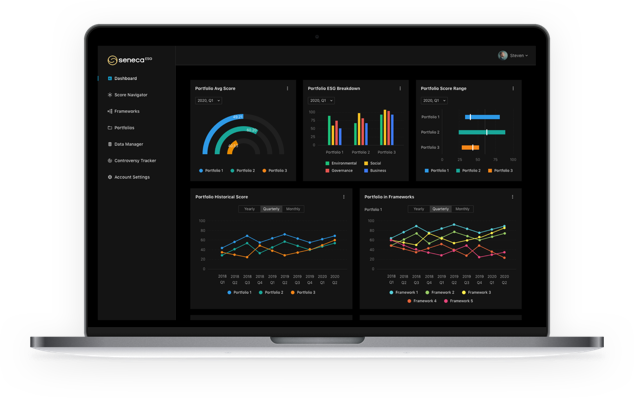
For companies looking to streamline their ESG reporting and improve performance, leveraging expert solutions can make the process more efficient and insightful. 세네카 ESG offers AI-powered tools designed to simplify ESG data collection, analysis, and reporting, helping businesses stay ahead of the curve. With our innovative platform, you can easily integrate and manage your ESG strategies, ensuring compliance with global benchmarks like GRESB while maximizing sustainability efforts. Reach out to Seneca ESG to learn how we can support your journey toward a more sustainable future.
출처:
[1] https://www.gresb.com/nl-en/
[2] https://worldgbc.org/advancing-net-zero/embodied-carbon/
[4] https://www.gresb.com/nl-en/the-power-of-gresb-driving-change-in-the-real-assets-industry/