 日本語
日本語  English
  简体中文
简体中文  香港中文
香港中文  Français
  Español
  Bahasa Indonesia
  한국어
한국어 
In today’s fast-evolving regulatory landscape, regulatory reporting is no longer a back-office obligation but a central pillar of corporate governance and transparency. From financial disclosures to sustainability metrics, the pressure to comply with complex regulatory reporting requirements has intensified in 2025. Businesses that treat compliance as a strategic asset—rather than a cost center—are gaining a competitive edge.
Driven by global standards, digitization, and ESG expectations, regulatory reporting spans across industries and jurisdictions. According to PwC’s Pulse Survey: Executive Takes on Election 2024, 74% of Consumer Markets leaders agree that the outcome of the election could significantly impact how they conduct business [1]. This article explores the key types of regulatory reporting, compliance best practices, and ESG integration to help organizations navigate this critical area.
What Is Regulatory Reporting?
Regulatory reporting refers to the submission of required data and information to regulatory authorities to demonstrate compliance with laws, standards, and supervisory expectations. These reports are typically periodic and include financial, operational, risk, or sustainability disclosures.
While regulatory reporting compliance used to focus primarily on financial statements, today’s scope has expanded. Modern reporting includes:
- Financial disclosures (e.g., Basel III)
- ESG and climate-related disclosures (e.g., CSRD, SEC climate rules)
- Risk management reports
- Cybersecurity and data privacy compliance (e.g., GDPR, CCPA)
Failure to meet regulatory reporting requirements can result in fines, reputational damage, and loss of market access. Therefore, a proactive compliance strategy is essential.
Types of Regulatory Reporting: An Expanding Landscape
について types of regulatory reporting vary by region, industry, and company size. However, they generally fall into the following categories:
| Reporting Type | 目的 |
| Financial Reporting | Ensure transparency of financial position and risk (e.g., GAAP, IFRS) |
| Prudential Reporting | Monitor capital adequacy, liquidity, and solvency (e.g., Basel III, Solvency II) |
| ESG and Sustainability | Disclose non-financial metrics and climate risk (e.g., CSRD, ISSB, TCFD) |
| Operational Risk Reporting | Manage and disclose internal risk and compliance controls |
| Tax and Regulatory Filings | Ensure tax compliance and jurisdictional reporting (e.g., FATCA, CRS) |
| Cybersecurity/Data Privacy | Report breaches and data handling processes (e.g., GDPR, NIS2 Directive) |
Increasingly, regulators expect data consistency across all these reports, reinforcing the need for integrated, accurate, and auditable systems.
Regulatory Reporting Compliance: Challenges and Solutions
Achieving regulatory reporting compliance in 2025 means confronting several persistent challenges:
- Data Fragmentation: Many companies operate legacy systems that are not integrated, making it difficult to compile accurate, real-time data.
- Changing Requirements: With regulations evolving rapidly across jurisdictions, staying current is resource intensive.
- Manual Processes: Overreliance on spreadsheets increases the risk of human error and audit failure.
Solutions include:
- Implementing end-to-end reporting platforms with workflow automation, data validation, and real-time dashboards.
- Adopting cloud-based ESG and financial reporting tools such as Seneca ESG’s EPIC platform.
- Creating cross-functional regulatory teams with legal, IT, finance, and sustainability expertise.
According to Deloitte, sales of ESG reporting software are projected to exceed $1 billion in 2024, reflecting a major shift toward digital compliance and reporting solutions fueled by rising regulatory pressures and investor expectations [2].
Regulatory Reporting Examples: Global ESG and Climate Disclosure Rules
To illustrate the diversity and global nature of modern regulatory frameworks, here are some recent regulatory reporting examples from leading jurisdictions:
- EU: CSRD(コーポレート・サステナビリティ・レポーティング指令) requires over 50,000 companies to report on double materiality, Scope 1–3 emissions, and value chain sustainability.
- U.S: SEC Climate Disclosure Rule mandates public companies to disclose climate-related risks, emissions data, and governance processes.
- UK: TCFD-Aligned Disclosures are now mandatory for large UK companies, requiring forward-looking scenario analysis and climate strategy.
- Singapore: SGX Listing Rules demand sustainability reporting from all listed companies, guided by global frameworks like GRI そして SASB.
These examples show how regulatory reporting requirements are no longer siloed by geography or industry—they’re interconnected, transparent, and enforceable.
ESG Integration in Regulatory Reporting: The 2025 Imperative
In 2025, regulatory reporting compliance is deeply intertwined with ESG. Investors, customers, and regulators alike expect consistent, comparable, and forward-looking non-financial disclosures.
Key ESG reporting trends include:
- Alignment with the ISSB’s Sustainability Disclosure Standards, which unify fragmented frameworks like TCFD and SASB.
- Introduction of limited or reasonable assurance requirements for ESG data, making accuracy essential.
- A shift from voluntary to mandatory Scope 3 reporting, especially in the EU and Asia-Pacific regions.
Companies that embed ESG data into their core reporting workflows gain strategic advantages. According to PwC’s 2024 Global Investor Survey, 71% of investors believe companies should embed ESG and sustainability directly into their corporate strategy, highlighting the growing weight of ESG factors in investment decision-making [3].
Building a Future-Ready Regulatory Reporting Strategy
To future-proof your regulatory reporting approach, consider the following steps:
- Conduct a regulatory gap assessment to identify existing shortfalls and future obligations.
- Invest in technology that supports both financial and ESG reporting across global frameworks.
- Train cross-functional teams to understand the overlap between financial compliance, risk, and sustainability.
- Engage with regulators early, especially if your organization operates across jurisdictions.
- Standardize your data governance framework to ensure quality, consistency, and audit-readiness.
By transforming compliance from a defensive necessity into a strategic capability, companies not only mitigate risk but also create long-term stakeholder value.
Seneca ESG’s Smart Solutions for a Sustainable Future
Reducing environmental impact requires both individual action and innovative business solutions. We believe that lessening emissions doesn’t have to be complicated. With the right tools and insights, companies can make sustainability both achievable and actionable. That’s why we’re excited to introduce すごい—our innovative solutions designed to simplify and empower your journey toward a greener future.
すごい is our all-in-one ESG data management platform, making sustainability reporting seamless and straightforward. Its standout features are:
- Broad Disclosure Support: Integrates over 70 disclosure frameworks, enabling you to meet diverse compliance requirements with ease.
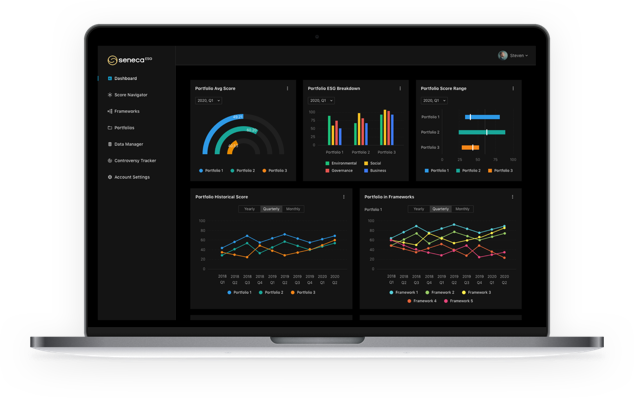
- Real-Time Insights: Benefit from an intuitive dashboard that provides clear, actionable visualizations of your ESG performance.
- Streamlined Processes: Automates data collection, aggregation, and reporting, saving you time and ensuring accuracy.
Want to learn more about how EPIC can help your business cut its carbon footprints and drive actionable sustainability? Get in touch with us today and discover how our innovative tools are paving the way for a sustainable future.
最終的な感想
Regulatory reporting in 2025 is more than compliance—it’s a blueprint for transparency, trust, and transformation. As the convergence between ESG and regulatory requirements accelerates, organizations must evolve their strategies accordingly.
Whether disclosing carbon emissions, cybersecurity risks, or capital reserves, the organizations that invest in proactive, tech-enabled, and ESG-integrated reporting will lead the way in resilience, reputation, and results.
Start by evaluating your current regulatory reporting infrastructure. Consider how it aligns with ESG priorities, digital capabilities, and cross-border obligations. In a world shaped by transparency and stakeholder accountability, regulatory reporting is your foundation for responsible growth.
参考文献
[1] https://www.pwc.com/us/en/library/pulse-survey/executive-insights-election-2024/sectors.html
[3] https://www.pwc.com/gx/en/issues/c-suite-insights/global-investor-survey.html