 English
  简体中文
简体中文  日本語
日本語  香港中文
香港中文  Français
  Español
  Bahasa Indonesia
  한국어
한국어 
In 2025, environmental, social, and governance (ESG) performance is no longer a nice-to-have—it’s a business imperative. With growing regulatory pressure, investor scrutiny, and stakeholder expectations, the question is not whether to measure ESG, but how do companies measure their ESG performance effectively?
According to PwC’s 2024 Global Investor Survey, 76% of investors say that companies’ ESG performance plays a significant role in their investment decisions. [1] Moreover, regulators such as the EU (through CSRD) and the U.S. SEC are requiring ESG disclosures to be not only transparent but auditable. This makes robust ESG measurement frameworks more crucial than ever.
Understanding ESG Performance: What It Covers
Before exploring how companies measure ESG performance, it’s essential to understand what’s being measured:
- Environmental: Greenhouse gas (GHG) emissions, energy usage, water consumption, waste management, biodiversity, climate risks.
- Social: Labor practices, DEI (diversity, equity, inclusion), community engagement, data privacy, human rights in the supply chain.
- Governance: Board diversity, executive compensation, ethical conduct, anti-corruption policies, and shareholder rights.
These ESG components vary across industries, which is why sector-specific benchmarks, like those from SASB or GRI, are often used.
Step 1: Choosing an ESG Framework
One of the first steps in ESG performance measurement is selecting a framework. The most widely adopted ESG reporting frameworks include:
- GRI (Global Reporting Initiative): Focuses on impact materiality.
- SASB (Sustainability Accounting Standards Board): Industry-specific, financial materiality-focused.
- TCFD (Task Force on Climate-related Financial Disclosures): Focuses on climate risk.
- ISSB Standards (IFRS S1 and S2): Global baseline adopted in 2023, integrating TCFD and SASB elements.
- CDP (Carbon Disclosure Project): Popular for environmental disclosures, especially emissions.
Many companies use a hybrid approach. According to OECD (2025), about 60% of companies reporting on sustainability use GRI, 54% comply with TCFD standards, and 37% adopt SASB—showing widespread alignment across multiple ESG frameworks. [2]
Step 2: Establishing ESG KPIs and Metrics
Companies then define Key Performance Indicators (KPIs) tailored to their operations and material risks. These may include:
| ESG Dimension | Example Metrics |
| Environmental | Scope 1–3 emissions, energy intensity, waste diversion rate, water usage |
| Social | Employee turnover, gender pay gap, training hours per employee, supplier audits |
| Governance | Board independence, whistleblower reports, ESG oversight at board level |
Best practice in 2025 also includes science-based targets (e.g., SBTi-aligned GHG targets) and tracking Scope 3 emissions—which account for over 70% of a company’s carbon footprint.
Step 3: Data Collection and ESG Tools
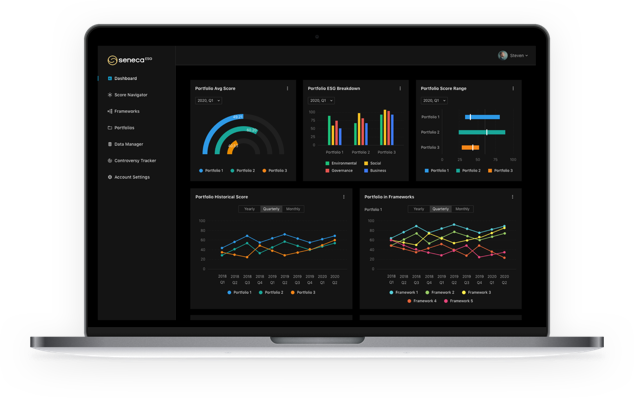
Collecting reliable ESG data is among the most complex yet vital tasks. Those platforms will enable automated data collection from across departments, ensure audit trails, and support real-time ESG dashboards. According to Gartner (2025), 80% of large firms now use ESG platforms to consolidate and validate non-financial data. [3] Get in touch with us today and discover how our innovative tools are paving the way for a sustainable future.
Step 4: Rating and Benchmarking ESG Performance
Once ESG data is collected, companies benchmark their performance using:
- External ESG Ratings
- Internal benchmarking across business units and regions.
- Peer comparison using platforms like Bloomberg Terminal.
ESG ratings influence investment, reputation, and creditworthiness. According to MSCI’s 2024 analysis, companies with higher ESG ratings consistently secure capital more cheaply—paying lower interest on debt and lower required returns on equity—demonstrating a clear financial benefit from strong sustainability performance. [4]
Step 5: Assurance and Transparent Reporting
As ESG reports face increased regulatory scrutiny, companies are prioritizing third-party assurance. In 2025, the EU’s CSRD mandates limited assurance on ESG disclosures—expected to evolve to reasonable assurance by 2028.
Public reporting must align with recognized standards and include:
- Double materiality assessments (especially in Europe)
- ISSB-aligned disclosures (for global consistency)
- Climate transition plans and progress updates
Companies like Nestlé, Apple, and BlackRock now publish integrated annual reports, combining financial and ESG data in a unified format.
Case Studies: Measuring ESG in Practice
Unilever
Unilever applies SASB and GRI frameworks to track over 90 ESG KPIs, from water stress to fair wage coverage. It uses TCFD-aligned scenario analysis to assess climate risk and publishes ISSB-ready disclosures. [5]
Microsoft
Microsoft employs a proprietary ESG dashboard to monitor emissions, DEI metrics, and governance oversight. It charges internal carbon fees to business units, incentivizing low-carbon decision-making. [6]
Siemens
Siemens integrates ESG metrics into its enterprise risk management and ties executive compensation to ESG KPIs, including energy efficiency and safety records. [7]
2025 Trends: What’s New in ESG Measurement?
- AI-Driven ESG Analytics
Firms now use AI to detect anomalies in ESG data, generate predictive insights, and automate GHG forecasting.
- Value Chain ESG Mapping
Scope 3 emissions tracking and supplier ESG scoring are becoming standard, especially with CSRD and SEC rules expanding boundary expectations.
- Integrated Assurance
Leading firms engage Big Four auditors for both financial and ESG data review, streamlining audit quality and investor trust.
- ESG-linked Financing
Performance-based sustainability-linked bonds and loans now require companies to set measurable ESG KPIs as covenants.
Strategic Takeaways for ESG Leaders
| Action | Description |
| Define Materiality | Use double or financial materiality to focus metrics. |
| Select Frameworks | Align with ISSB, SASB, TCFD, GRI as needed. |
| Use ESG Platforms | Automate and centralize data tracking. |
| Integrate Reporting | Combine ESG and financial reports where possible. |
| Engage Auditors | Prepare for assurance-ready ESG reporting. |
Companies must treat ESG measurement as a strategic pillar, not a compliance task.
Final Thoughts: From Metrics to Market Leadership
So, how do companies measure their ESG performance in 2025? They begin with the right frameworks, establish tailored KPIs, embrace digital tools, ensure transparency, and continually benchmark performance.
In today’s climate-conscious market, measuring ESG is more than accountability—it’s about resilience, reputation, and revenue. As investor expectations evolve, companies that lead with credible, data-backed ESG measurement will gain a lasting competitive advantage.
Now is the time to invest in ESG intelligence—because what gets measured, gets managed.
References:
[1] https://www.pwc.com/gx/en/issues/c-suite-insights/ceo-survey.html#global-investor-survey
[4] https://www.msci.com/documents/10199/6c2115f3-5fef-b883-278d-853de6ffc019